Micromobility IoT Dashboard
Introduction
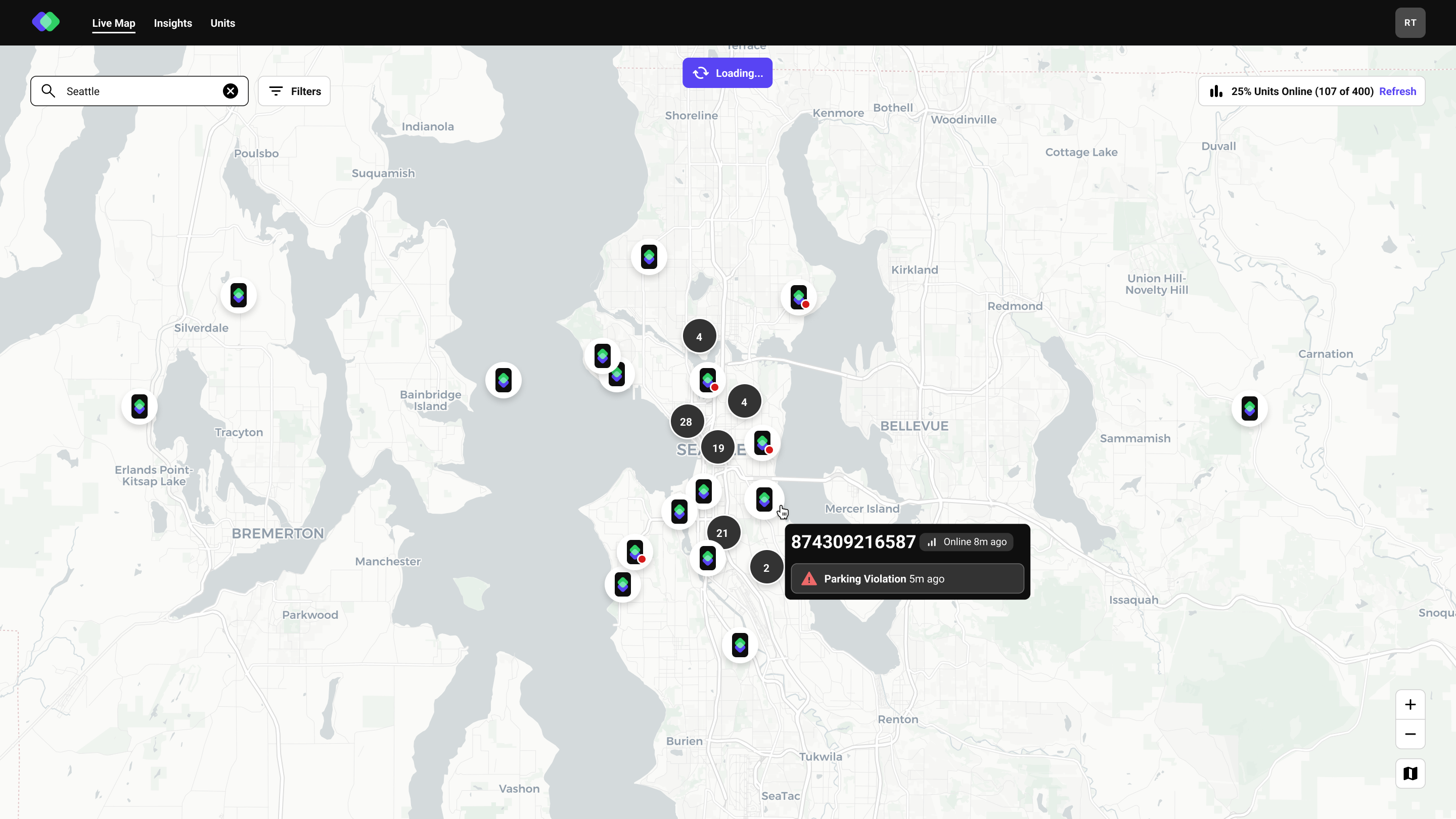
Our small, cross‑functional guild of four freelance engineers and designers was tasked with building a full‑stack web application for a client in the micromobility sector. The goal: give the client a single pane of glass to manage thousands of mobile, IoT‑enabled devices scattered across major cities worldwide. From the first sketch to a production‑ready deployment, the project moved from concept to launch in roughly six months.




Because of confidentiality agreements, the client’s brand name and several product‑specific details are omitted from this public showcase.
Core Features
-
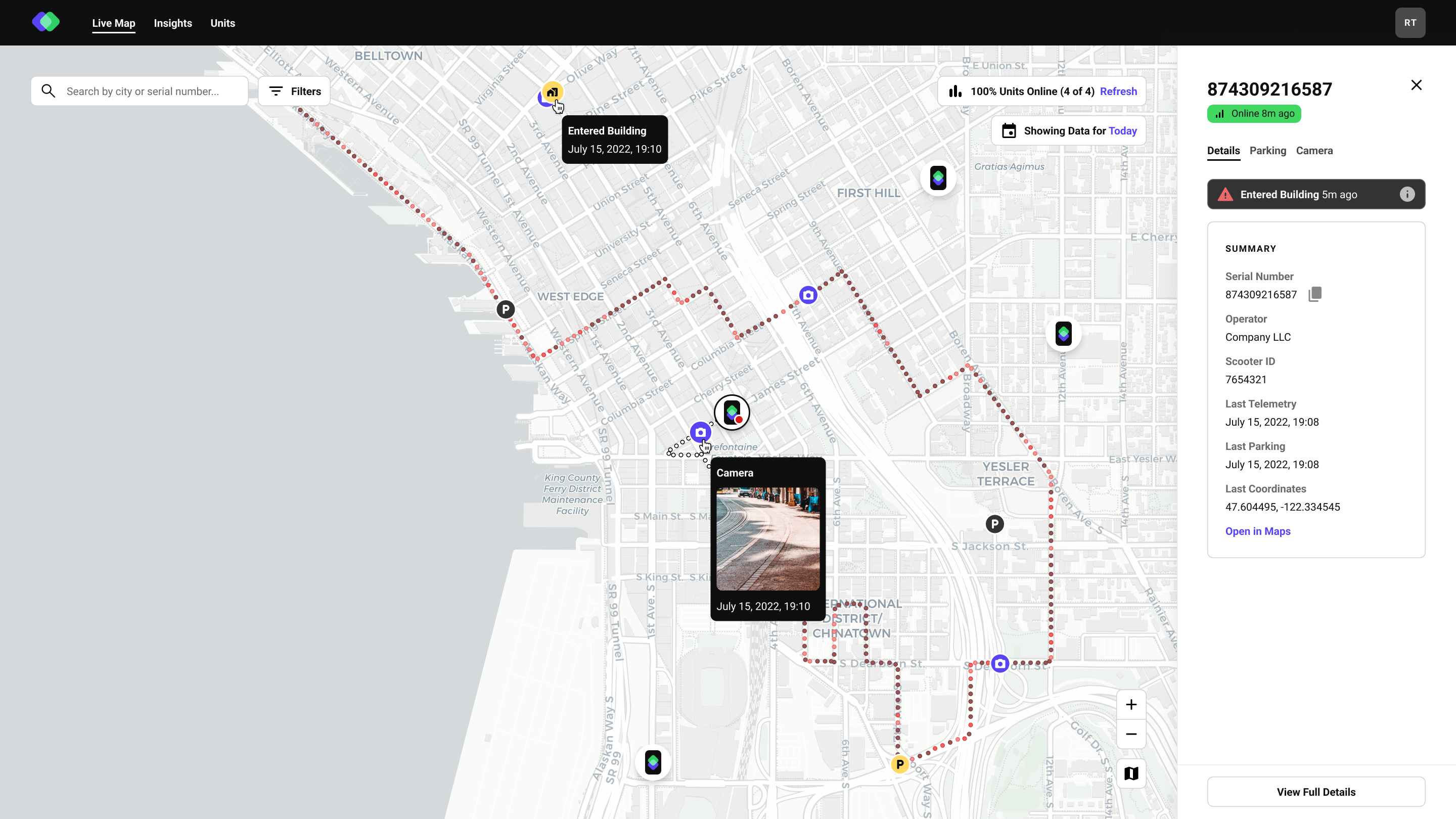
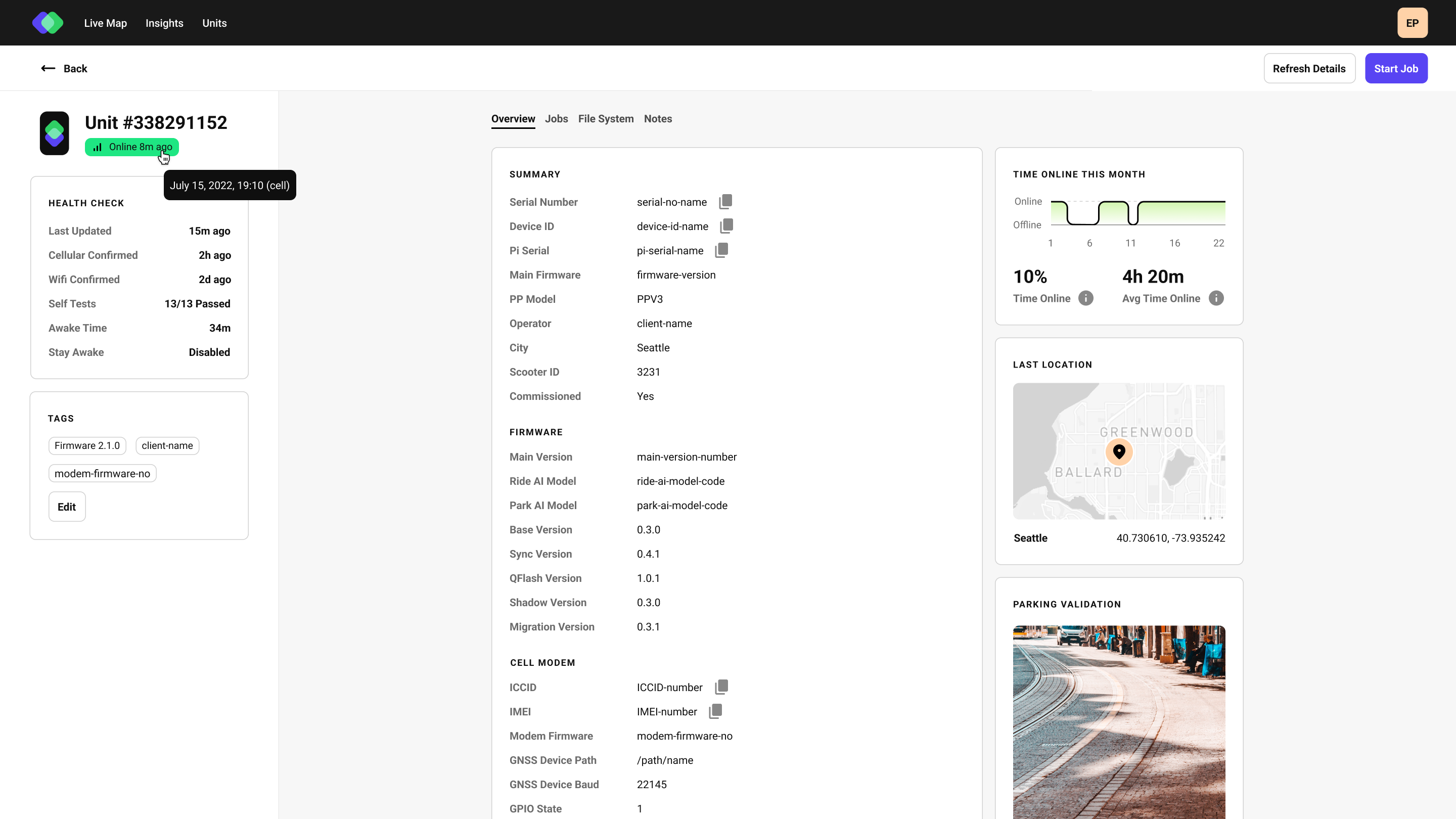
Unified Management Dashboard – A responsive web interface lets operators monitor and control the fleet from anywhere.
-
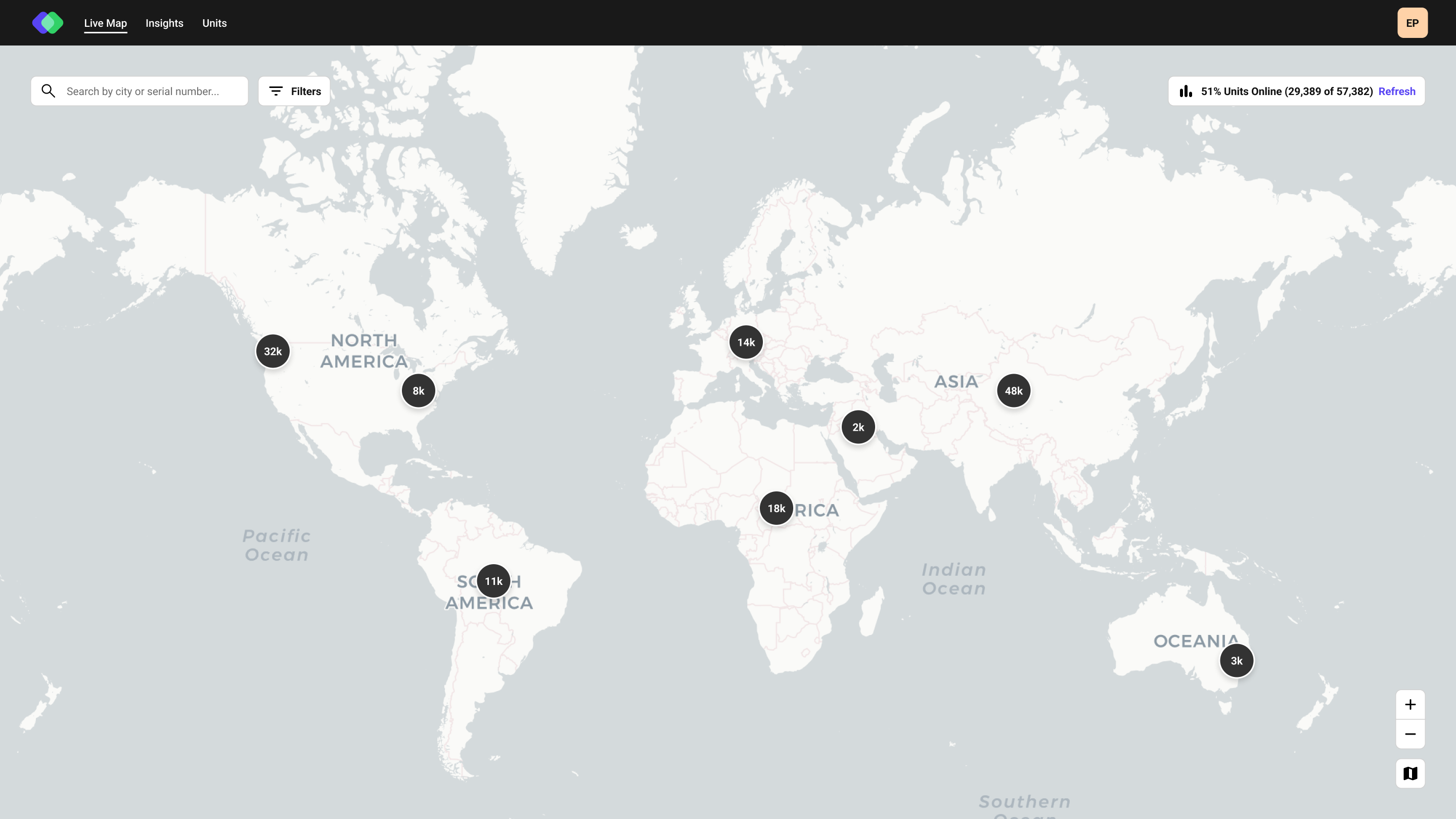
World‑Map View – A world map with typical pan‑and‑zoom capabilities displays live GPS coordinates sent by each device, providing an at‑a‑glance geographic overview.
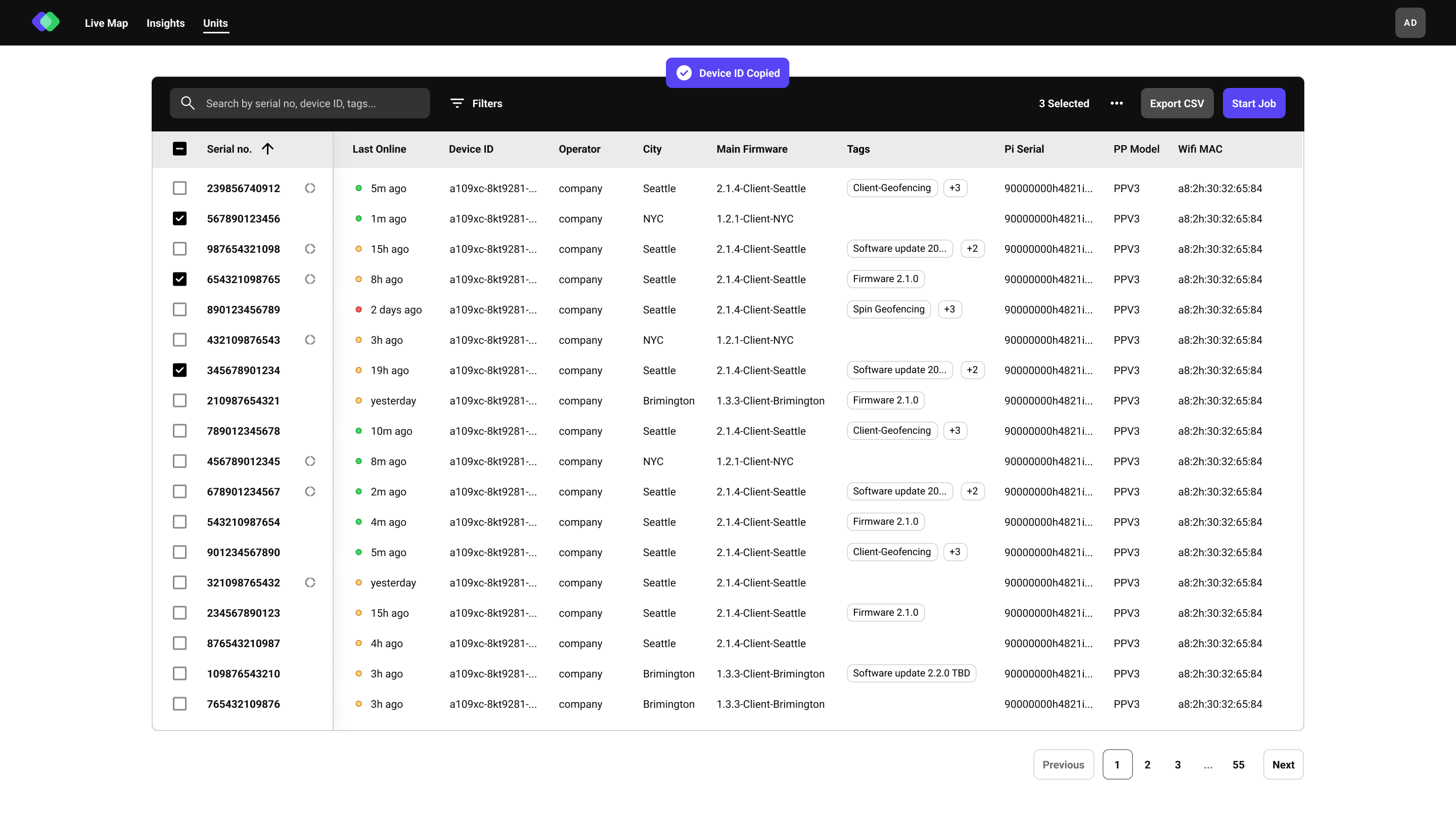
- Tabular & Search‑Rich View – A searchable table complements the map, allowing precise filtering by status, battery level, firmware version, and custom tags.
-
Intermittent Connectivity Handling – Devices are mobile and cannot rely on continuous connectivity. Firmware is programmed to auto‑connect to Wi‑Fi or cellular networks whenever they become available, and both the device side and the cloud platform are hardened against sporadic “heartbeat” intervals.
-
Robust Heartbeat Reporting – Each remote unit periodically transmits a lightweight packet containing its GPS location, health metrics, and connectivity status, ensuring the central system always has the latest snapshot of fleet health.
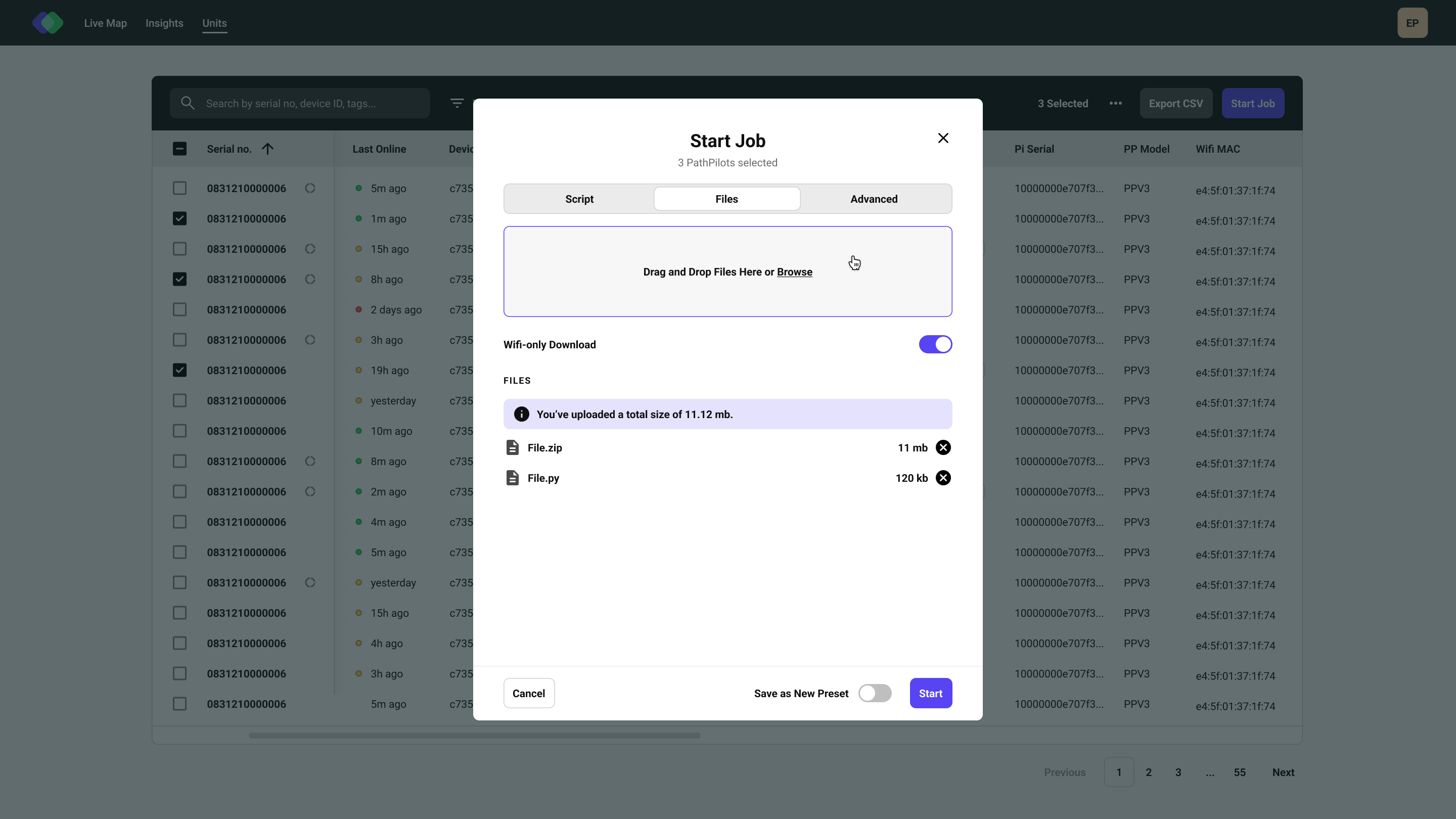
- Over‑the‑Air (OTA) Updates & Remote Access – Administrators can push firmware patches directly from the dashboard and, when needed, open an SSH session to a device for deep diagnostics.
Technology Stack
| Layer | Technologies |
|---|---|
| Cloud Platform | AWS (EC2, ELB, S3, RDS/PostgreSQL, CloudFront) |
| Back‑End API | Python, Django (REST), ZeroMQ, Docker |
| Front‑End UI | Javascript, React (static build served via CloudFront) |
| Device Firmware | Raspberry Pi, Python, ZeroMQ |
| Communication | Dedicated TCP sockets managed by ZeroMQ on a separate EC2 cluster |
| Data Store | Single PostgreSQL instance holding real‑time telemetry and metadata |
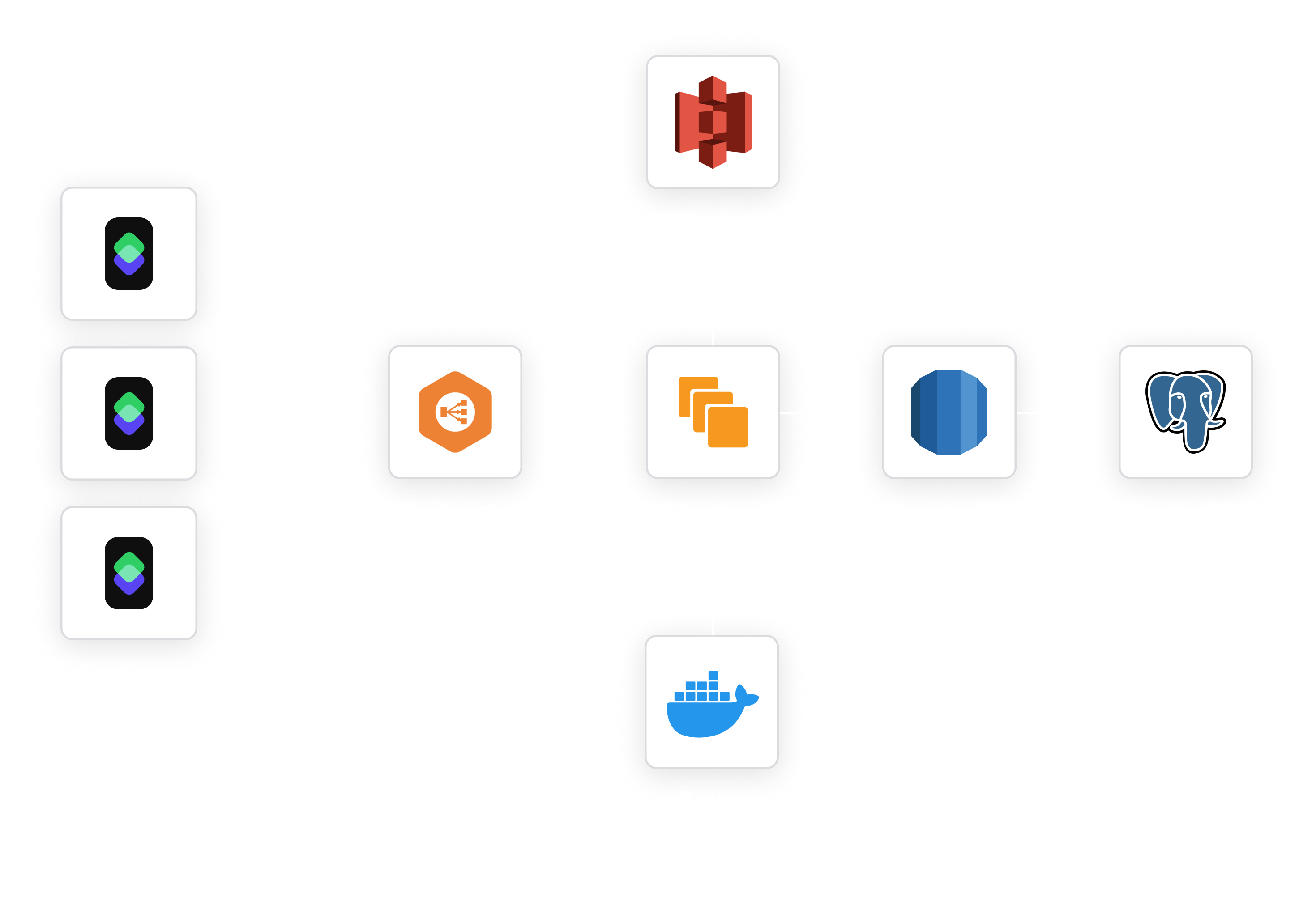
The AWS‑hosted cloud layer acted as the hub: devices connect to a ZeroMQ‑powered endpoint, while administrators pull the React UI from CloudFront and issue API calls to Django services running behind Elastic Load Balancers. Docker containers guarantee consistent environments across the EC2 fleet, and the load balancers provide high availability for both the web‑app API and the device‑API endpoints.
Development Process
- Discovery & Pitch – We began with slide decks, brainstorming workshops, and a detailed functional‑requirements document. This phase clarified the client’s loosely defined business goals.
- Architecture & UX Design – Using Figma, we visualized the dashboard, mapped data flows, and drafted the overall system architecture (cloud, device, database, and API layers).
- Parallel Implementation – With a solid blueprint, work split into five concurrent streams:
- Firmware (Raspberry Pi + Python)
- Cloud services (Docker orchestration, ELB, PostgreSQL)
- Back‑End API (Django REST)
- Front‑End UI (React)
- Integration & testing (heartbeat handling, OTA pipeline)
- Iterative Testing & Deployment – Continuous integration pipelines validated each component, and staged rollouts on AWS ensured a smooth transition from staging to production.
Guiding the client through every stage — from concept to live system — kept expectations aligned and accelerated decision‑making.
Conclusion
Delivering a fully functional, production‑grade IoT dashboard in just six months was both challenging and rewarding. We transformed an ill‑defined set of objectives into a tangible product that now powers a global fleet of electric scooters, handling intermittent connectivity, OTA updates, and real‑time geolocation with confidence. While many “north‑star” features remain on the roadmap, this rapid prototype proved that a lean, well‑coordinated team can meet demanding technical requirements on a tight schedule.
If you’d like to learn more or explore how a similar solution could accelerate your own IoT initiatives, feel free to reach out.
Get in Touch
Have a question or want to discuss your next project? Send a quick message. Let's start building something great together.